

How StemWave acoustic wave therapy may help knee, shoulder, and heel pain, what sessions are like, and when to see a physician first in Carmel, IN.
A patient told us recently, "My knee aches every time I take the stairs, my shoulder bugs me when I reach for the top shelf, and the first steps out of bed in the morning feel like I am walking on a bruise." She was not dealing with one big injury. She was dealing with three nagging problems that had slowly started to shape her day. She had tried rest, ice, new shoes, and over-the-counter pain relievers, and she wanted to know if there was something else she could try before talking about injections or surgery.
That is a question we hear often in our Carmel office, and StemWave is one of the options we talk through. Here is a plain look at what StemWave is, how it may help with knee, shoulder, and heel pain, what sessions are like, and when you should see a physician first.
What StemWave is
StemWave is a non-invasive therapy that uses acoustic sound waves delivered through the skin to the area that hurts. Those waves are designed to stimulate circulation, calm inflammation, and support the body's own repair process, including collagen production in tendons and other soft tissue. There are no needles, no medication, and no downtime. Most people describe the feeling as a rhythmic tapping or pulsing over the sore spot.
The idea is simple. Many joint and tendon problems linger because the tissue is not getting the blood flow and repair signals it needs to finish healing. StemWave aims to give that process a push so the area can recover, rather than just covering up the pain for a few hours.
You can read more on our StemWave Therapy in Carmel, IN page.
StemWave for knee pain
Knee pain shows up in a lot of ways. Some people feel it below the kneecap after running or jumping. Others notice an ache on the inside of the knee after a long day on their feet, or stiffness when they stand up after sitting for a while.
StemWave is often used for the soft tissue around the knee, such as irritated tendons and strained muscles that attach near the joint. Patients commonly come in for:
- Aching below or around the kneecap with stairs, squats, or kneeling
- Tendon irritation from running, pickleball, or other sports
- Lingering soreness after a strain that never fully settled down
- General stiffness and joint discomfort that makes daily activity harder
StemWave does not rebuild worn cartilage or fix a torn ligament. If your knee locks, gives way, or swelled up quickly after an injury, that needs a proper evaluation first. For the everyday aches and tendon problems that keep coming back, though, it can be a helpful, low-risk option to try.
StemWave for shoulder pain
The shoulder moves more than any other joint in the body, and that freedom comes with a cost. The tendons around it, especially the rotator cuff, take a lot of strain from reaching, lifting, throwing, and even long hours at a computer with rounded shoulders.
We often see StemWave used for:
- Pain on the outside of the shoulder when lifting the arm overhead
- Tendon irritation from golf, tennis, swimming, or weight training
- Soreness from repetitive work like painting, lifting kids, or yard work
- Tight, achy muscles around the shoulder blade and upper arm
Because shoulder pain is often tied to posture and how the neck and upper back move, we may suggest pairing StemWave with Chiropractic Care in Carmel, IN. Treating the sore tendon while also improving how the spine and shoulder blade move can help the relief last longer.
StemWave for heel pain
If the first few steps in the morning are the worst part of your day, you are not alone. Heel pain is one of the most common complaints we hear, and it is often linked to irritation of the thick band of tissue along the bottom of the foot (plantar fasciitis) or the Achilles tendon at the back of the heel.
These tissues can be slow to heal on their own because they do not get much blood flow, and we stand on them all day. Acoustic wave therapy is widely used for this type of stubborn heel and tendon pain. Patients often come in for:
- Sharp heel pain with the first steps out of bed or after sitting
- Pain along the bottom of the foot after walking or standing for long periods
- Soreness or tightness at the back of the heel, especially after exercise
Good shoes, stretching, and smart activity changes still matter. StemWave works best as part of a plan that also takes pressure off the tissue while it heals.
What a StemWave visit is like
Your first visit starts with a conversation about your pain, your health history, and what you want to get back to doing. From there, we will let you know if StemWave makes sense for you and how it might fit with other care.
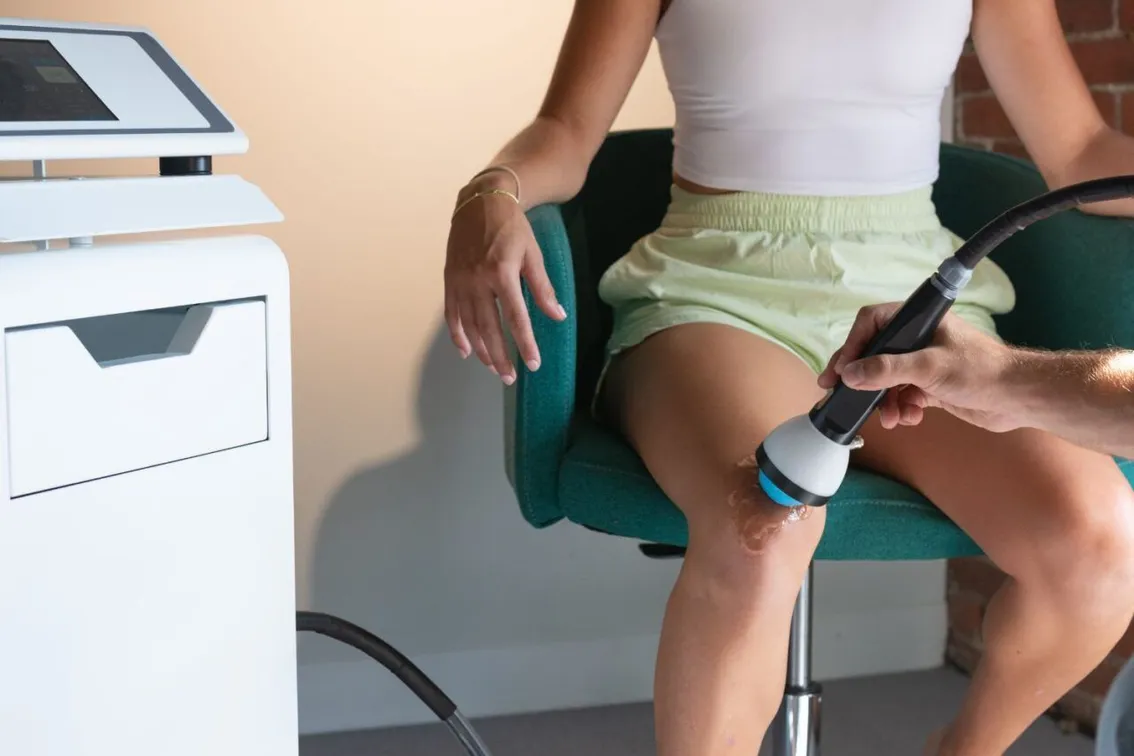
During treatment, you sit or lie comfortably while the applicator is moved over the area. There is nothing to recover from afterward, so most people go right back to their normal day. A few things to know:
- It is non-invasive and generally well tolerated. You may feel tapping or mild pressure over tender spots.
- Side effects are usually minor. Some people notice mild redness or a slight tingling in the treated area that fades on its own.
- It takes a series. Many patients notice improvement in pain and mobility after just a few treatments, and optimal results are usually seen within 4 to 6 sessions.
- Healing continues after your sessions. Because the goal is to support repair, benefits often keep improving over the following weeks.
Results vary from person to person. How long you have had the pain, how active you are, and your overall health all play a role.
When to see a physician first
StemWave is not the right first step for every kind of pain. Please see your physician or get urgent care if you have:
- Pain after a fall or injury where you cannot bear weight or move the joint
- A joint that is red, hot, and swollen, especially with a fever
- Numbness, tingling, or weakness spreading down the arm or leg
- Pain that wakes you at night and is getting steadily worse
Also let us know at your consultation if you are pregnant, have a pacemaker or other implanted device, take blood thinners, have a bleeding disorder, or are being treated for cancer. These can affect whether StemWave is a good choice and where we can safely treat.
Frequently asked questions
Does StemWave hurt?
Most people find it comfortable. You may feel a tapping or pulsing sensation, and very tender areas can feel a bit sensitive during treatment.
How many sessions will I need?
Many patients feel a difference after a few treatments, with optimal results usually seen within 4 to 6 sessions. We will give you a plan after your first visit.
Is there downtime?
No. You can return to your normal activities right after your session.
Can StemWave help sports injuries?
Yes, it is often used for sprains, strains, and tendon irritation from sports and active hobbies.
Can I combine StemWave with other care?
Yes. Many patients pair it with chiropractic care, and we will suggest what fits your situation.
Take the next step
If knee, shoulder, or heel pain has been holding you back, you do not have to just live with it. Our team in Carmel will listen, look at what is going on, and help you decide if StemWave is a good fit.
Book your StemWave visit online or call our office with any questions.
